

The Smart Water Blueprint: Your Utility's Missing Link Between Technology Chaos and Operational Success

Discover how water and wastewater utilities can overcome technology implementation challenges with a Smart Water Blueprint. Learn the 7-component framework that transforms scattered vendor solutions into an integrated system that actually works. Real case study included showing how one utility eliminated sanitary sewer overflows using this proven planning approach.

The Smart Water Blueprint: Your Utility's Missing Link Between Technology Chaos and Operational Success

One utility was struggling with sanitary sewer overflows in their system. They kind of knew where the overflows were happening. At least where they were reporting to be happening. This was a new and growing problem for them. They have plenty of technology vendors all with their own specific equipment, software, or service that said would solve their problems. During each meeting they would get excited as a utility and think they finally found what would solve their issues but somehow the pieces never came together.

Why Most Smart Water Projects Fail Before They Start

If you don’t have a specific document for your smart water project, you aren’t going to make it. After dozens of projects ranging from a simple sensor to fully integrated digital twins there is a common theme of what allows them to be successful and get a great start vs those who never really seem to take the first step. It’s a simple thing but often a bit of work to put together. That simple thing is a plan of action.

You can call it a master plan, roadmap, approach, but I like to call it a Smart Water Blueprint. This is a document that outlines what you have, what you need, and how to pull it all together. This blueprint will likely end up becoming a long and detailed document but it’s a simple thing to start.

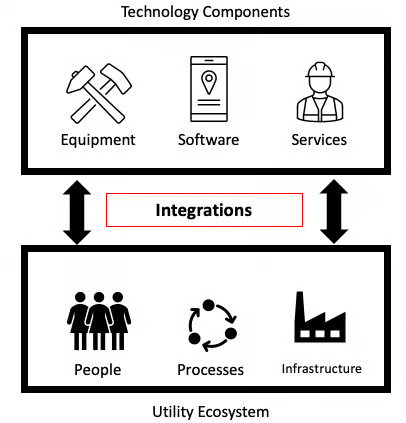
The 7 Components of a Smart Water Blueprint

The Smart Water Blueprint consists of 7 items:

Infrastructure – All the physical components of the utility including manholes, pipelines, treatment plants, meters, water tanks, etc.

People – The team that runs the system on a daily basis including operations, engineering, planning, and administrative.

Processes – The standard procedures and systems in place for how changes are made, what to do on a daily basis, and how to respond during emergencies.

Equipment – Any sensors, pumps, devices that collect information or allow for physical changes to the system.

Software – The data and interface program that collects the data, preforms calculations, and provides recommendations or visualization of data for actions.

Services – 3rd party contractors or services including engineers, technology consultants, or temporary help to install the equipment and software.

Integrations – Not a permanent component but this connects everything together during the planning, implementation, and maintenance phases of the smart water system.

From Chaos to Clarity: A Real Wastewater Example

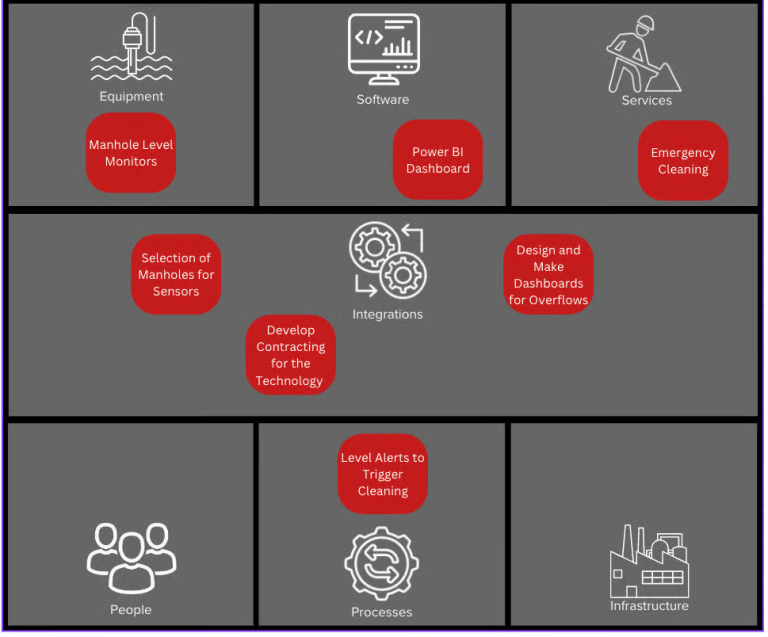
That wastewater utility took this blueprint process and started to slot in the different technology and utility components into it. Most of the planning was done by a core team from planning and operations but shared widely within the utility. They spent an afternoon pulling the first version of the blueprint together. The first pass was rough but looked like the following:

Start of Smart Water Blueprint

This was their start of the blueprint. Not all the details were known but the corner stone pieces were there. They wanted to get some sensors, a data dashboard, and some emergency cleaning all set up to help with this problem. Based on this document they could now go and meet with others in planning, engineering, operations, and other departments around the utility. They even met with another agency of the health department because they wanted to better control the amount of grease coming into the system from the restaurants in the utility.

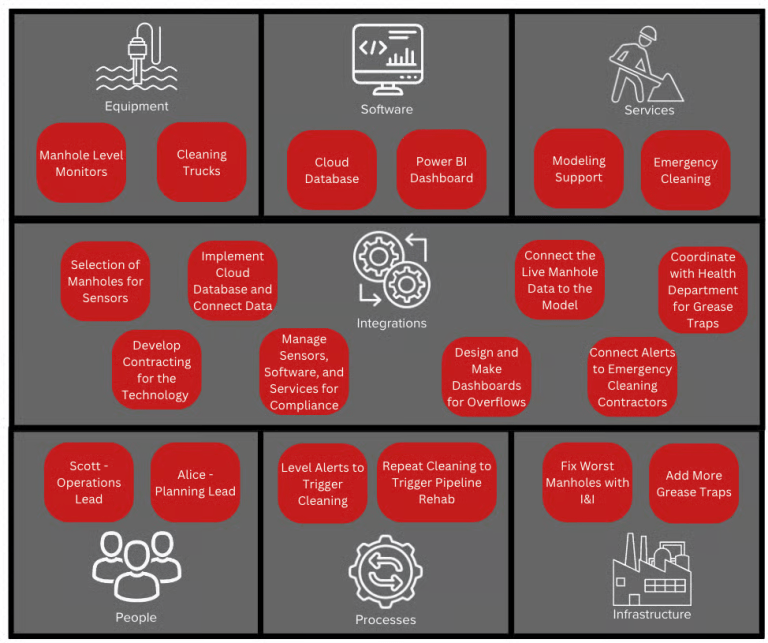
After a few weeks of collaborating with others and adding additional components, it looked more like the below.

Updated Smart Water Blueprint

They now had a plan, it was shared with everyone, and there was alignment on the external technology needed plus the internal changes and support needed. They then moved onto procurement, implementation, and eventually maintenance. The end system in place looked a bit different. They never really got a good solution for the grease traps, but they were able to reduce their sewer overflows and get back in control of their system.

Your Blueprint Starts Today

Whether you’re a utility struggling to move from vendor meetings to actual implementation, or a technology provider trying to help utilities succeed, the Smart Water Blueprint provides the foundation for success.

The framework is simple. The work of filling it in takes effort and collaboration. But utilities that invest this upfront planning time avoid the endless cycle of exciting meetings that lead nowhere.

What’s holding you back from creating your utility’s Smart Water Blueprint? If you’re still stuck in the meeting-to-meeting cycle, hoping the next vendor will magically solve everything, you already know the answer. Start with the seven components. Spend an afternoon with your core team. Create version one.

The pieces will finally start coming together.


Know someone whose utility needs this framework? Forward this to them—it might be exactly what breaks their planning logjam.


Learn More Now - Knowledge is Power, get in touch with a Smart Utility Engineer for an Assessment

Contact Us

Contact us

contact us Get your comprehensive smart utility assessment Physical Infrastructure Performance + Digital Infrastructure Architecture + Performance Benchmarking against industry standards + A strategic roadmap

Read More »